Chapter 1 | What Is AI Humanized Text?
Chapter 1 | What Is AI Humanized Text?
1.1 From “sounding human” to showing real thinking
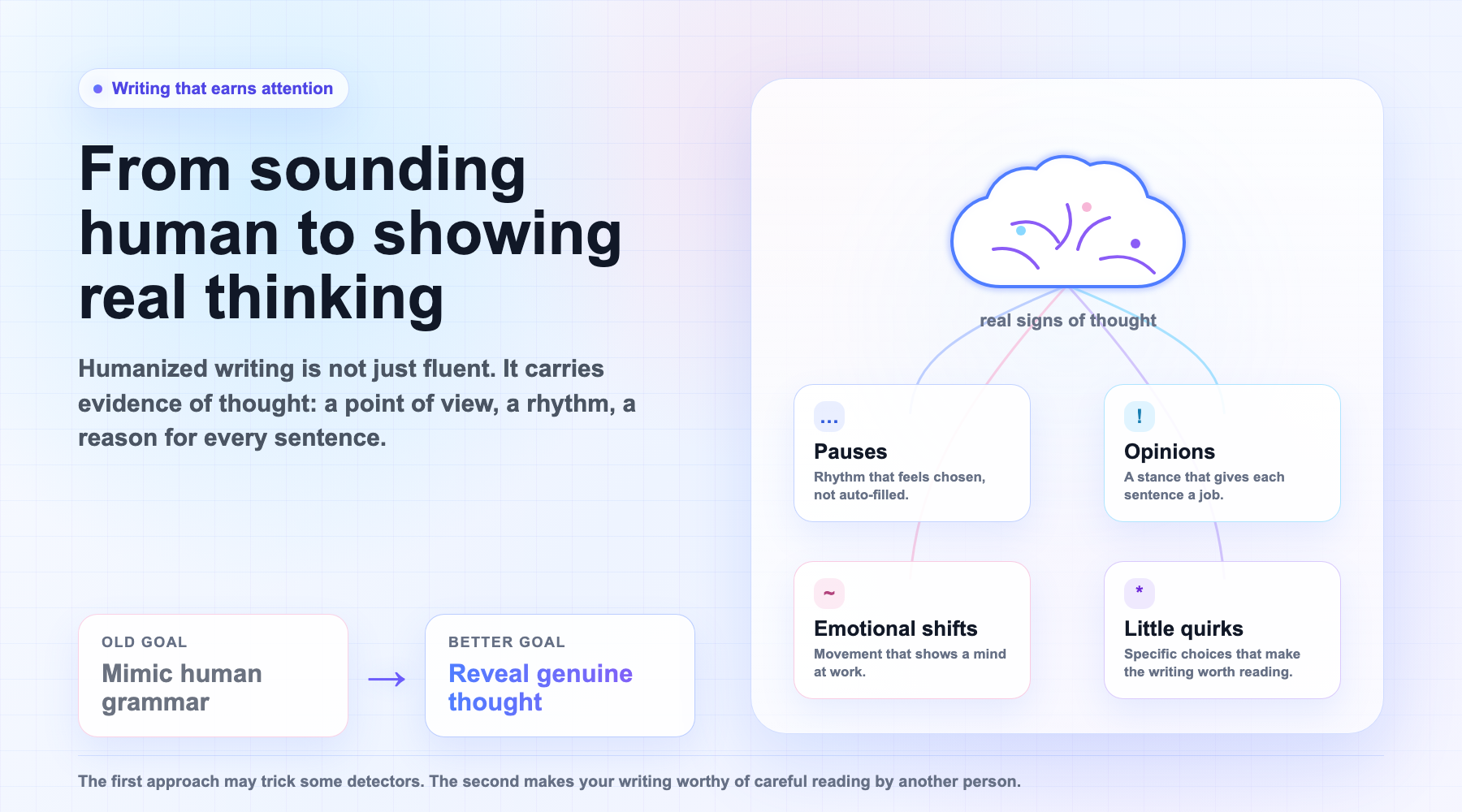
Humanizing text isn’t just about making it sound like a person wrote it. It’s more about adding real signs of thought — like pauses, opinions, emotional changes, and those little quirks that show someone has genuinely thought things through. It’s not just about sounding fluent; it’s about having a good reason for each sentence, like a real person would. This shift from ‘sounding human’ to ‘expressing genuine thought’ goes from just mimicking grammar to really capturing how we think. The first approach might trick some detectors, but the second one makes your writing worthy of careful reading by another person.
1.2 Why AI-generated text often feels mechanical
AI text has no internal impulse to ‘want to say something’. Instead, prediction drives each step - shaped by patterns, not purpose. A pause? Never happens. Contradiction? Not found here. Each phrase moves forward without doubt. Mistakes do not appear. Grammar stays flawless. But that smoothness costs something. The rough bits are gone. Personal rhythm fades. Even when accurate, nothing lands with urgency. Correctness fills the page. Yet no line carries weight because it must exist.
1.3 What AI can help with, and what it cannot do for you
AI can help you put language in order instantly, correct grammar errors, write an essay that is exactly how you want it to be organized and much more. Nor can it substitute for that leap of fucking behind the expressive habits that only real thinking engenders: an imperfect lexical dislocation, a speaking out after being made silent, a sentence somehow exploding forth because its grammar is wrong but it's still less than any actual object. AI can provide you with all the "right words" but that "reason that simply had to be articulated," is a personal experience that will need you to articulate.