Introduction
Why should we Humanize?
By 2026, the market for AI text humanization is expected to explode from a niche tool into a whopping $100 billion industry supporting writers. Right now, the leaders are Undetectable AI with 23 million users, Phrasly boasting over 3 million writers from 180+ countries, and Lynote, which helps humanize more than 10 million words each year. Originality.ai is being used by major players like Duke, Harvard, Purdue, and Boston universities.
A survey by Scribbr of the top 100 universities in the US revealed that 78% don’t have clear or have relaxed rules around AI writing tools. Still, raw outputs from ChatGPT are plagued by significant issues: imprecise language, awkward style, logical missteps, repetition, strange errors, grammar mistakes, and a lack of originality.
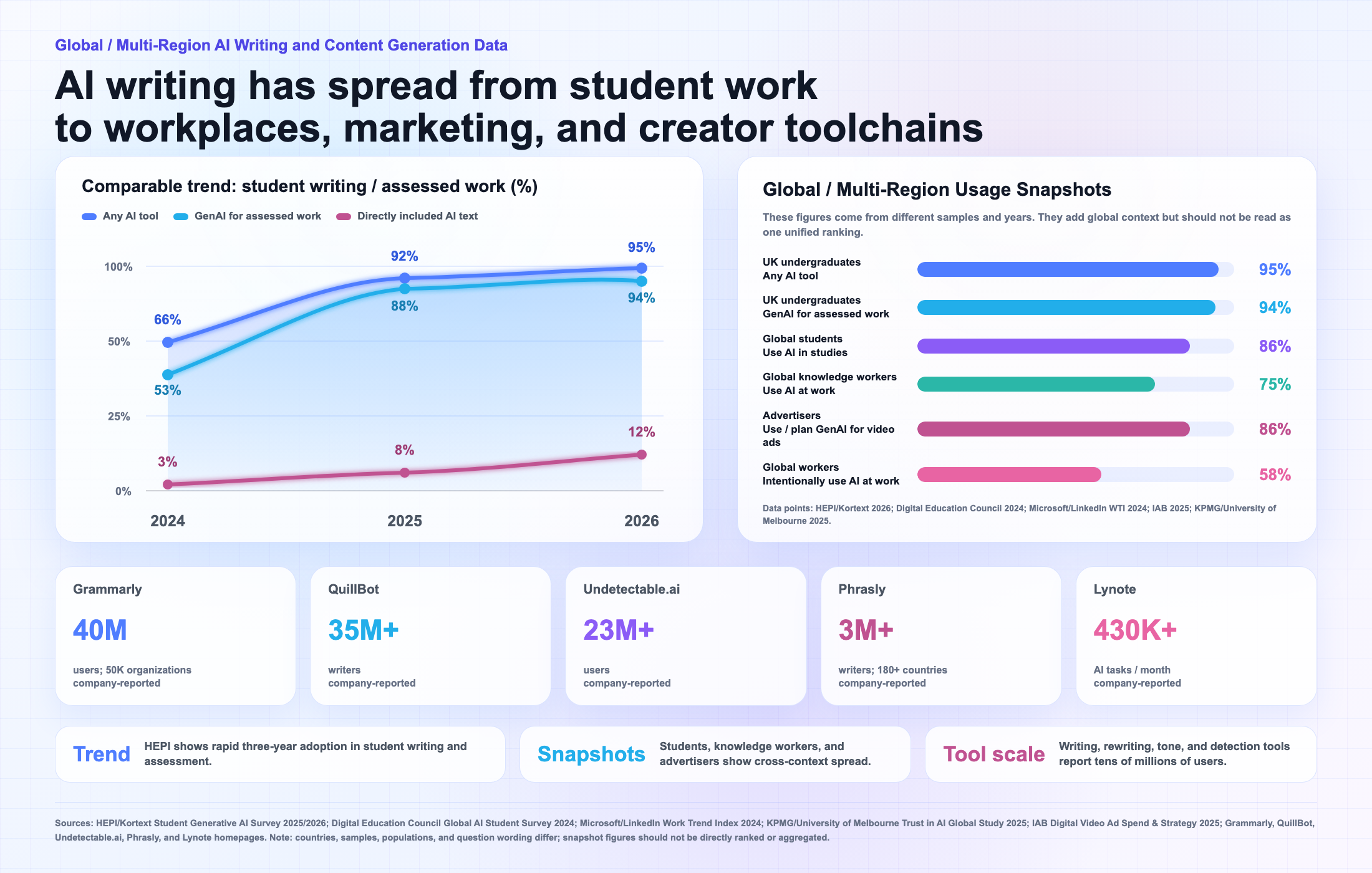
So, humanizing AI text isn’t just a nice-to-have anymore; it’s crucial for students, researchers, and creators to avoid detection, gain credibility, and maintain their unique voice while leveraging the speed of AI. By 2026, getting good at this will be essential for boosting content productivity.
What does this handbook do?
✅ Quickly choose best AI Humanize tools/skills.
✅ Compare pricing, use cases, strengths, and risks.
✅ Build a tool stack for new-media content production.
✅ Improve copy naturalness, brand voice, and reuse efficiency.
✅ Avoid blind purchases and common tool pitfalls.
✅ Create a practical workflow from rewriting to publishing.
What does this handbook NOT do?
❌ It doesn't treat "humanizing text" as just swapping out words or making sentences smoother.
❌ It doesn't dive deep into fancy tech or trends.
❌ It's not just bypassing AI detection
We also genuinely want to hear from you. Share the problems, suggestions, examples, and improvements you discover as you use this handbook. Your feedback will make it more practical, more specific, and more useful in real classrooms and study sessions.